
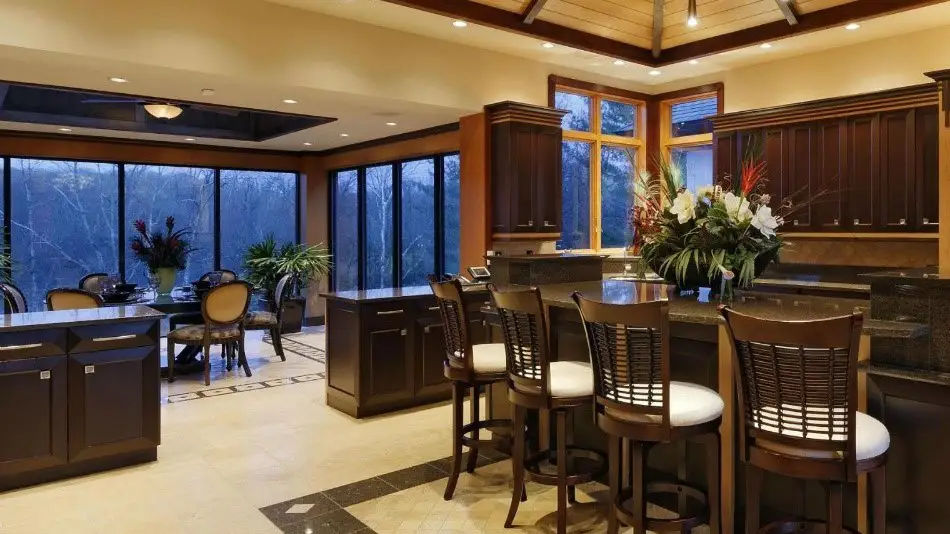
The best window film for privacy both day and night is a frosted, etched-look, opaque or decorative film, because it diffuses light and blocks the view from both sides no matter which side is brighter. One-way mirror films give daytime privacy with a clear view out, but they reverse after dark when your lights are on. If you want a daytime view and nighttime privacy on the same window, pair a reflective film with blinds or shades.
The light-level rule behind one-way film
"One-way" film is the most misunderstood product in window tinting. It isn't truly one-way; it's a reflective film, and it works on a simple rule: the brighter side sees a mirror, the darker side sees through.
On a sunny St. Louis afternoon, outside is far brighter than your living room. Someone on the sidewalk sees a reflective, mirror-like surface, and you see out clearly. That's the effect people want.
After sunset, the situation flips. Your lamps are on, the street is dark, and now the inside is the brighter side. People outside can see in, and you look at your own reflection. The same thing happens on dark, overcast days when you turn on interior lights. No reflective film beats this rule, whatever the label says.
Dual-reflective films soften the problem. They're more reflective on the outside and less reflective (darker) on the inside, so you get less mirror glare looking out at night and a more comfortable view. They still follow the light-level rule, though, so they don't give true nighttime privacy on their own.
Options for privacy around the clock
If you need privacy at all hours, choose a film that works by diffusing or blocking light rather than reflecting it. Lighting conditions don't change how these work:
- Frosted and etched-look film. Looks like sandblasted or acid-etched glass. It lets soft daylight through but hides shapes and detail. This is the workhorse for bathrooms and sidelights.
- Opaque (white-out) film. Blocks the view completely while still passing some diffused light. Good for glass that faces a wall, an alley or a neighbor's window a few feet away.
- Gradient film. Frosted at the bottom fading to clear at the top, or the reverse. You keep sky and treetop views while blocking the eye-level sightline.
- Decorative film. Patterns, stripes, textures and stained-glass-style designs. Privacy plus a design element, popular on front doors and transoms.
- Blackout film. Blocks the view and nearly all light. Best for media rooms, nurseries, night-shift bedrooms and storage areas.
We cover the full range on our decorative and frosted window film page, and the reflective and dual-reflective options on our privacy window film page.
Privacy film comparison
| Film type | Daytime privacy | Nighttime privacy | View out | Light in | Best for |
|---|---|---|---|---|---|
| Reflective (one-way) | Strong | No (reverses) | Clear | Reduced | Sunny street-facing rooms, offices |
| Dual-reflective | Strong | No (reverses) | Clear, less glare at night | Reduced | Living rooms, home offices |
| Frosted / etched-look | Strong | Strong | Blurred / none | Soft, diffused | Bathrooms, sidelights, conference rooms |
| Opaque | Full | Full | None | Some, diffused | Glass facing close neighbors |
| Gradient | Strong where frosted | Strong where frosted | Clear above or below | Good | Bathrooms, bedrooms, ground-floor rooms |
| Decorative | Varies by pattern | Varies by pattern | Partial | Good | Front doors, transoms, storefronts |
| Blackout | Full | Full | None | Almost none | Media rooms, nurseries, day sleepers |
Room-by-room picks
Bathroom
Frosted or etched-look film is the default. It blocks the view at all hours and keeps the room bright. If you want to see sky from the tub, a gradient film that's frosted from the bottom up gives you that.
Front room on a busy street
If you mainly want daytime privacy and love your view, a dual-reflective film handles it, with blinds or sheers drawn at night. If you'd rather never think about it, a gradient or frosted band across the lower half of the glass blocks the sidewalk sightline 24/7 and leaves the top clear. Busy corridors in St. Louis City, where many homes sit close to the sidewalk, are a common place for this.
Bedroom
Bedrooms are mostly used at night, so one-way film alone is the wrong tool. Choose frosted or gradient film for full privacy, or blackout film if you also want a dark room for sleeping in. Reflective film plus a good shade works if you want an unobstructed daytime view.
Home office
Dual-reflective film gives daytime privacy and cuts glare on screens, which is often the bigger issue. If you work late with lights on, add a shade.
Close neighbor windows
Where houses sit only a few feet apart, a window that looks straight into the neighbor's is a perfect spot for opaque or frosted film. You keep the daylight and lose the awkward sightline. This is common in older neighborhoods in University City and Webster Groves.
Front door sidelights
Sidelights and door glass let people see straight into your entry. Frosted or decorative film keeps the light while hiding what's inside, day and night. Pairing it with security and safety film also helps hold the glass together if someone tries to break it near the lock.
Offices, conference rooms and exam rooms
Interior glass walls in offices and medical spaces need privacy regardless of outdoor light, so reflective film rarely fits. Frosted bands, gradients or full frosted panels give privacy where it counts, and decorative film can carry a logo or pattern. See our commercial window tinting page for business applications.
Pairing film with blinds at night
For many St. Louis homes, the most practical setup is a reflective or dual-reflective film plus your existing blinds or shades. During the day the film does the work: privacy, glare control, and up to 99% UV blocking with quality films. You get to leave the blinds open and enjoy the view. At night, lower the blinds as you normally would.
That setup also helps with heat. West-facing glass takes the hardest afternoon sun in summer, and a reflective film rejects a share of that solar heat; performance varies by film, and we show you the spec sheet (TSER, VLT, glare reduction) before you choose. Our solar heat control film page explains more.
See it on your own glass
Privacy looks different on every window, depending on exposure, lighting and what's across the street. During a free estimate, we put samples right on your glass so you can check the view from inside and outside before deciding.
Choosing the right film
Start with when you need privacy. Daytime only: reflective or dual-reflective. Day and night: frosted, opaque, gradient or decorative. Total darkness: blackout. Then think about how much light and view you want to keep. Most homes end up with two or three different films, matched room by room.
If you're also comparing film types for heat and clarity, read ceramic vs. dyed vs. reflective window film. When you're ready, schedule a free on-site estimate or call (314) 200-0434. Ask about our lifetime warranty.
Frequently Asked Questions
Is there a one-way window film that works at night?
No. One-way or reflective films work by reflecting light, so the brighter side sees a mirror and the darker side sees through. At night, with lights on inside, the effect reverses and people outside can see in. For nighttime privacy, use a frosted, opaque or decorative film, or pair reflective film with blinds or shades.
What window film gives privacy 24 hours a day?
Frosted, etched-look, opaque and decorative films give privacy around the clock because they diffuse light rather than reflect it, so the view is blocked from both sides regardless of lighting. Gradient films do the same over the part of the glass they cover. Blackout film blocks both the view and the light.
What is the best privacy film for a bathroom window?
A frosted or etched-look film is the usual choice for bathrooms. It blocks the view day and night while still letting soft daylight in, and it is easy to keep clean. If you want a view out of the top of the window, a gradient film that is frosted at the bottom and clear at the top works well.
Will privacy film make my room dark?
It depends on the film. Frosted and decorative films let a good share of daylight through as soft, diffused light, and reflective films vary in how much light they pass. Blackout film blocks nearly all light. We put samples on your glass during the estimate so you can see the effect before choosing.