
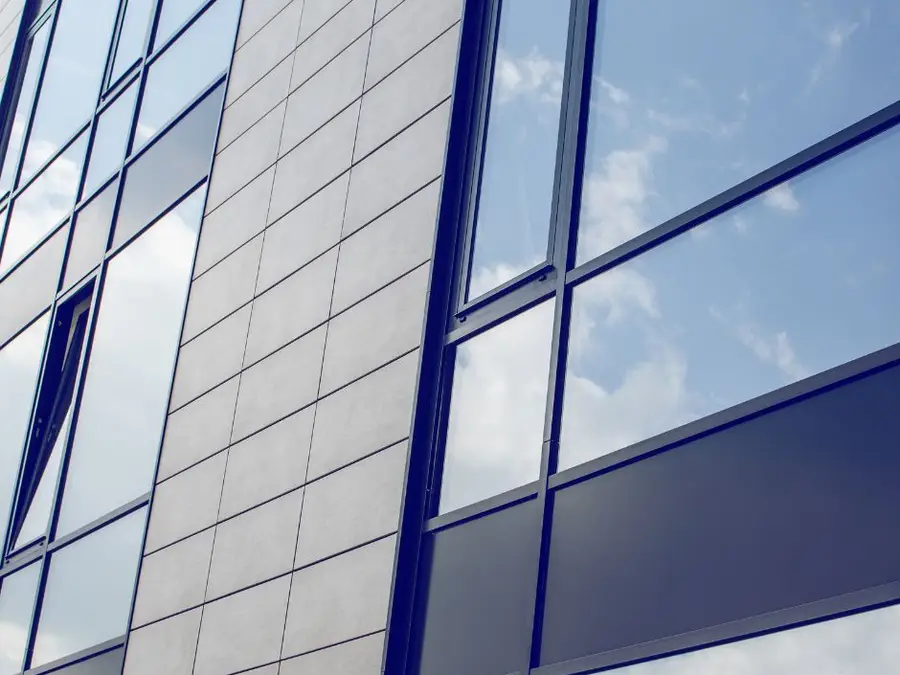
Dyed film is the budget option for glare and privacy, reflective (metallized) film rejects a lot of heat but looks mirrored by day, and ceramic film rejects heat with a natural look and no signal interference. Spectrally selective film goes further by blocking infrared heat while keeping rooms bright. For most St. Louis homes with hot west or south windows, ceramic or spectrally selective film is the usual fit; reflective film is common on commercial buildings where a mirrored facade is acceptable.
The five main types of window film
Window films are thin layers of polyester with different materials built in. What's built in determines how the film handles heat, how it looks, and how long it holds up. Here is each one in plain terms.
Dyed film
Dyed film uses a dye layer that absorbs some sunlight. It is the simplest and most economical film. It cuts glare well and adds daytime privacy, and it has a soft, non-reflective look.
The tradeoffs: dyed film absorbs heat rather than rejecting much of it, so its heat control is modest. The dye can also fade over time. It works well on shaded windows, bathrooms, or rooms where glare is the real complaint.
Metallized / reflective film
Reflective film contains thin metal layers that bounce solar energy away from the glass. That makes it very effective at heat rejection, and it is durable. It is the film behind the shiny, mirror-like look you see on many office buildings.
The tradeoffs: the mirrored appearance isn't for every home, and the interior view can look tinted. Because it contains metal, it can reduce cell and wireless signals in some buildings, particularly where coverage is already weak. Not every building notices a difference, but it's worth weighing.
Ceramic / nano-ceramic film
Ceramic film uses non-metallic ceramic particles that block a large share of infrared heat. It offers strong heat rejection without the mirror look, keeps a stable color, and does not interfere with cell signals.
The tradeoff is that it usually sits at a higher price tier than dyed film. For many homeowners, the combination of heat control, clear views, and a natural appearance makes it the default choice.
Spectrally selective film
Spectrally selective film is engineered to block much of the infrared (heat) portion of sunlight while allowing most visible light through. The goal is a room that stays bright but runs cooler. These films often look nearly clear.
It's a strong option for homeowners who want heat control but don't want to darken their rooms or change the look of the house. It is generally a premium tier.
Hybrid film
Hybrid films combine a dyed layer with a light metallized layer. The idea is to get better heat rejection than dyed film with less reflectivity than a full metallized film. They are a middle-ground choice, though the metal content means the signal consideration still applies to a degree.
Separate from these categories, low-E window film adds a low-emissivity coating for winter heat retention, and security and safety window film is thicker film designed to hold broken glass together.
Comparison table: window film types side by side
| Film type | Heat rejection | Glare control | Daytime look | Night look | Signal interference | Relative cost | Best for |
|---|---|---|---|---|---|---|---|
| Dyed | Low to moderate | Good | Soft tint, non-reflective | Tinted glass | None | Lowest | Glare, privacy, shaded windows |
| Metallized / reflective | High | Very good | Mirror-like outside | Mirror effect reverses; can see in | Possible | Moderate | Commercial facades, heavy sun exposure |
| Hybrid | Moderate to high | Very good | Light reflectivity | Mildly reflective inside | Possible, less than full metal | Moderate | Balanced homes and offices |
| Ceramic / nano-ceramic | High | Good to very good | Natural, low reflectivity | Natural | None | Higher | Homes wanting heat control and clear views |
| Spectrally selective | High for infrared | Moderate | Nearly clear | Nearly clear | Generally none | Higher | Bright rooms that overheat, curb appeal |
These are general characteristics. Performance varies by film, so we show you the spec sheet (TSER, VLT, glare reduction) for each option before you choose. Quality films in every category typically block up to 99% of UV.
Appearance: day vs. night
This is the part that surprises people most. Reflective film looks like a mirror from outside during the day because the outside is brighter than the inside. Once the sun goes down and your lights are on, the effect flips. People outside can see in, and you may see your own reflection from inside.
Dyed, ceramic, and spectrally selective films don't have a strong mirror effect, so they look more consistent day and night. None of the clear or tinted films give true nighttime privacy. If that is what you need, look at frosted and decorative window film or read our guide to the best window film for daytime and nighttime privacy.
Heat vs. light: the core tradeoff
Older approaches to heat control relied on making glass darker or more reflective. Less light in meant less heat in. That works, but it also makes rooms dimmer.
Ceramic and spectrally selective films changed that by targeting infrared energy specifically. You can keep a high visible light transmission (VLT) and still reject a good share of heat. When comparing, look at both TSER (total heat rejected) and VLT (brightness) together, not just one number. If lowering cooling load is your main goal, our post on whether window film lowers energy bills covers what to expect.
HOA and curb-appeal considerations
A mirrored film can noticeably change how a home looks from the street. Some homeowners associations have rules about exterior appearance, and a highly reflective film may draw attention in a neighborhood where every other house has clear glass.
If you live in a subdivision with an HOA, check the rules before committing to a reflective film. Ceramic and spectrally selective films are usually the safer choice because they keep the glass looking close to how it does now. In historic or architecturally distinctive neighborhoods, a low-reflectivity film also keeps original windows looking original.
Which film fits common St. Louis situations
- West-facing family room or sunroom that overheats. Ceramic or spectrally selective film for strong heat control without darkening the room. See solar heat control window film.
- Older home with original single-pane windows. Common in the City and inner-ring suburbs. A low-reflectivity ceramic film keeps the historic look, and low-E film can help with cold glass in winter. Glass compatibility gets checked first.
- Street-facing front windows needing daytime privacy. A dyed or hybrid film can work for daytime privacy; add frosted film where you need privacy at night too.
- Hardwood floors and furniture fading. Almost any quality film blocks up to 99% of UV; pick the tier based on how much heat and glare you also want to control. See UV and fade protection film.
- Office suite with glare on screens. Reflective or hybrid films are common on commercial glass; ceramic is a good choice if signal strength matters. Many offices in Clayton and Creve Coeur have large expanses of glass where this comes up. See commercial window tinting.
- Shaded windows where glare is the only issue. Dyed film is an economical fit.
See samples on your own glass
Film looks different in a showroom than it does on your windows with your light and your view. During a free on-site estimate we hold samples up to your actual glass, check the glass type, and show you the spec sheet for each option. Book your free estimate or call (314) 200-0434.
Bottom line
There isn't one best film, only the best film for a particular window and goal. Dyed film is economical for glare and privacy. Reflective film is a strong heat performer with a mirrored look. Ceramic and spectrally selective films deliver heat control while keeping your windows looking natural, which is why they are the most common recommendation for residential window tinting. If cost is part of your decision, see what sets the price of home window tinting.
Frequently Asked Questions
Which window film blocks the most heat?
Reflective metallized films and high-performance ceramic or spectrally selective films generally reject the most heat, but they do it differently. Reflective films bounce heat away and have a mirror-like look, while ceramic and spectrally selective films target infrared heat and keep a more natural appearance. Performance varies by film, so compare the TSER number on each spec sheet.
Does reflective window film work at night for privacy?
Not the way most people expect. Reflective film gives daytime privacy because it is brighter outside than inside. At night, when your lights are on, the effect reverses and people outside can see in. For nighttime privacy you need a frosted or decorative film, or window coverings.
Will metallized window film affect my cell signal?
It can. Films that contain metal layers may reduce cell or wireless signal strength in some buildings, especially where coverage is already weak. Ceramic films are non-metallic and generally avoid this concern, which is one reason many people choose them.
Is dyed window film a bad choice?
Not at all for the right job. Dyed film is an economical way to cut glare and add some daytime privacy, and it can be a good fit for shaded windows or rooms where heat is not the main issue. It provides less heat rejection than ceramic or reflective films and its color may fade over time.