
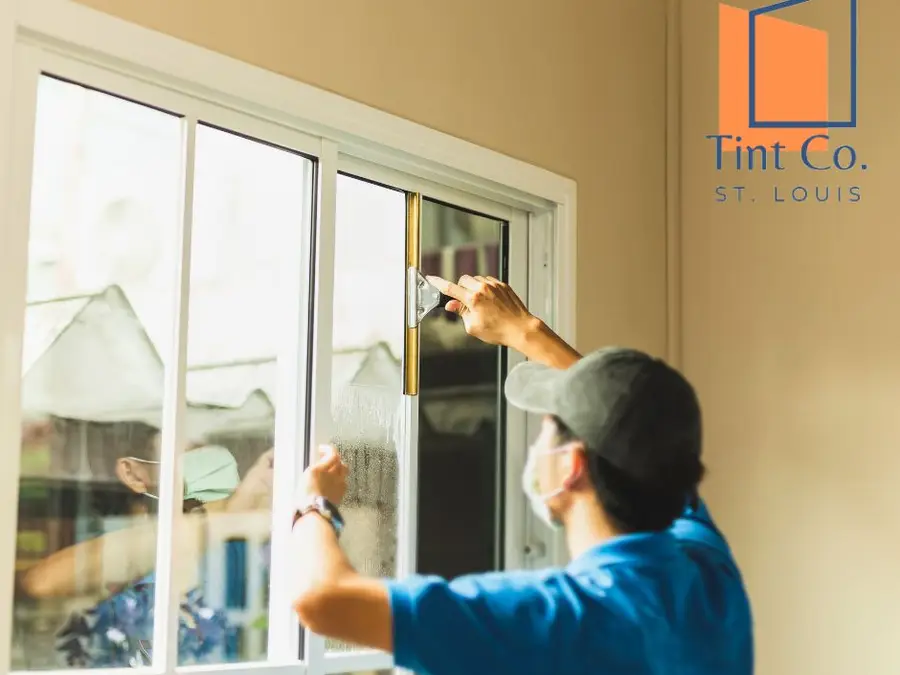
Residential window tinting is a thin film applied to the inside of your existing home windows to block solar heat, glare and up to 99% of UV rays. It's the fastest way to fix a hot west-facing room, a TV you can't see in the afternoon, or furniture that's fading, without replacing windows. We install home films across St. Louis City and County and show you samples on your own glass first.
What residential window film does
Window film is a multi-layer polyester sheet with a scratch-resistant face and an adhesive side. It's applied to the interior surface of the glass, trimmed to the edge of the frame, and cures in place. Depending on how it's built, it can reject solar heat, cut glare, block UV, add daytime privacy, or hold broken glass together.
Unlike blinds or curtains, film works while you still see out. You keep the view and the daylight, and the room stops acting like a greenhouse in July. Performance varies by film, so we always show you the spec sheet (TSER, VLT and glare reduction) before you choose.
Signs your home needs window tinting
- One or two rooms are noticeably hotter than the rest of the house every summer afternoon.
- You close the blinds to watch TV or work on a laptop.
- Hardwood floors, rugs, artwork or cabinets show faded patches where the sun hits.
- Neighbors or the street can see straight into a bathroom, front room or ground-floor bedroom.
- Older single-pane windows feel cold in winter and hot in summer.
- A sunroom or room with skylights is too bright or too warm to use for half the year.
Room-by-room: where home window film helps most
Living rooms and family rooms
Big picture windows are great until the afternoon sun washes out the TV and heats the couch. A light ceramic or spectrally selective film cuts heat and glare while keeping the room bright, and blocks up to 99% of UV to slow fading on floors and furniture. Our UV and fade protection window film page covers that side in more detail.
West- and south-facing rooms
These are the rooms St. Louis homeowners call about most. Low summer sun from the west hits glass almost straight on in the late afternoon, right when outdoor temperatures peak. A heat-rejecting film is the main fix here; see our solar heat control window film page for how ceramic, reflective and clear films compare.
Bedrooms and home offices
Glare on monitors and morning sun in a bedroom are both easy to tame. Medium-shade films cut glare without making the room feel like a cave, and a slightly darker film can help east-facing bedrooms stay dimmer early in the day.
Bathrooms and street-facing windows
Frosted, etched-look or one-way films give privacy while still letting light in. Explore the options on our privacy window film and decorative frosted window film pages, or read our guide to the best window film for daytime and nighttime privacy.
Sunrooms and skylights
Sunrooms and skylights take the most direct sun in the house. A heat-control film can make the room usable through summer, and in older sunrooms with single-pane glass, a low-E window film also helps hold heat in during winter.
Patio and sliding glass doors
Large sliders are heat, glare and privacy problems all at once. Film can handle all three, and a security and safety window film adds shatter resistance to big ground-level panes.
Home window film types compared
Most residential jobs come down to a handful of film categories. Here's how they stack up in general terms; exact numbers vary by film and by your glass.
| Film type | Heat control | Glare | Look | Best for |
|---|---|---|---|---|
| Dyed | Low | Good | Tinted, non-reflective | Glare and privacy on a budget; less used for heat |
| Reflective / metallized | High | Very good | Mirror-like outside by day | Hottest west-facing glass where looks matter less |
| Ceramic / nano-ceramic | Good to high | Good | Neutral, low reflection | Most living areas; strong heat control without a mirror look |
| Spectrally selective (clear) | Moderate to good | Light | Nearly invisible | Homes where the view and curb appeal must not change |
| Low-E | Moderate to good | Light to moderate | Light, slight sheen | Older single-pane windows; year-round comfort |
| Privacy / decorative | Varies | Varies | Frosted, patterned or one-way | Bathrooms, entry glass, street-facing rooms |
For a deeper breakdown, read ceramic vs. dyed vs. reflective window film.
The St. Louis angle
St. Louis summers are hot and humid, with long stretches of strong sun. West- and south-facing rooms soak that up all afternoon, and many homes have one room that never cools down. Winters swing the other way, which is why year-round films like low-E make sense here.
Housing stock matters too. Brick homes in the City of St. Louis and inner-ring suburbs like Webster Groves, Kirkwood and University City often still have original single-pane or wavy old glass. Newer homes farther west in Chesterfield and Town and Country tend to have large insulated windows, two-story great rooms and walls of rear-facing glass. Each calls for a different film, and we check the glass before recommending one.
Our installation process
- Estimate and samples on your glass. We come to your home, measure every window, check the glass type and put sample films on your actual windows.
- Film choice with the spec sheet. We walk you through heat rejection, visible light and glare numbers so you pick based on facts, then give you a written quote.
- Glass prep and cleaning. We protect sills and floors, then deep-clean and scrape each pane so no dust or residue gets trapped.
- Precise install and edge trim. Film is wet-applied, squeegeed out and trimmed to a tight, even gap at the frame edge.
- Cure time and care instructions. Some haze or small water pockets are normal for a few days to a few weeks while film cures. We leave you simple care instructions.
What affects the cost of home window tinting
Every quote is based on your house. The main factors are total square footage of glass, the film type (ceramic and low-E films cost more than basic dyed film), the number and size of panes, divided-lite or French-pane windows, ladder or skylight access, and whether old film has to be removed first. Our guide on how much home window tinting costs explains each factor.
Care and lifespan
Wait for the film to cure before cleaning, usually about 30 days. After that, use a soft cloth or squeegee with a mild, ammonia-free cleaner, and avoid abrasive pads or blades on the film face. Quality interior film commonly lasts many years, and you can ask about our lifetime warranty.
Why hire a pro instead of DIY
Store-bought film is cheaper upfront, but bubbles, creases, dust specks and crooked edges are hard to avoid on large panes. The bigger risk is choosing a film that doesn't suit your glass, which can add heat stress to some insulated windows. We match the film to the glass and stand behind the work. Our work is guaranteed to last; if it isn't, let us know and we'll make it right. If you're worried about your window warranty, read will window film void my window warranty? or request a free estimate.
Frequently Asked Questions
Is home window tinting worth it in St. Louis?
For most homes with strong west or south sun, yes. Window film can make hot rooms more comfortable, cut glare on TVs and computer screens, and block up to 99% of UV rays that fade floors and furniture. How much heat it blocks varies by film, so we show you the spec sheet before you choose.
Will window tint make my house dark?
Not unless you want it to. Modern ceramic and spectrally selective films can block a lot of solar heat while staying light or nearly clear. We put samples on your actual windows so you can see the look in daylight before deciding.
Can you tint double-pane windows?
In most cases, yes. Some films are not a good match for certain insulated or older glass because they can add heat stress, so we check your glass type and pick a film that is compatible with it. You can also ask your window maker about their film guidelines.
How long does residential window film last?
Quality interior home window film commonly lasts well over a decade, depending on the film type and how much sun the window gets. Ask about our lifetime warranty when we give you your quote.
How long does it take to tint a house?
Many homes are done in a single day, and a few rooms can take just a few hours. Bigger homes, skylights or lots of French-pane windows can take longer, and we give you a time estimate with your quote.
Can I still see out after my windows are tinted?
Yes. Window film is applied to the inside of the glass and you keep your view, with the outside looking slightly tinted or nearly unchanged depending on the film. Light and clear films keep the view almost exactly as it was, while darker or reflective films dim it a little.