
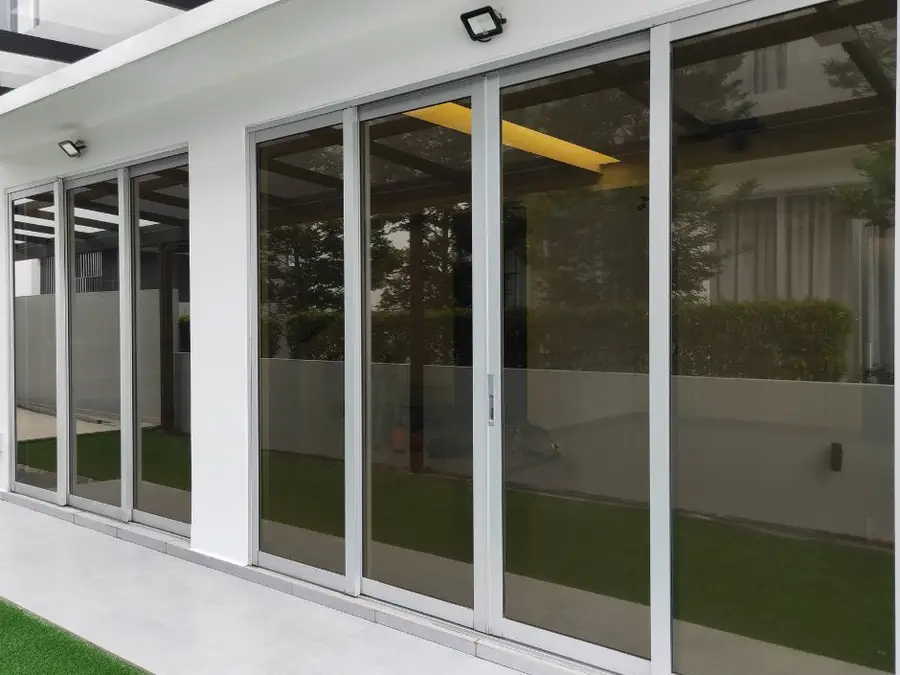
Low-E window film is a window film with a low-emissivity coating that reflects heat from inside your room back in during winter and blocks a share of solar heat in summer. That makes it one of the few true year-round films, a good match for St. Louis's cold winters and hot, humid summers. It works especially well on older single-pane windows that you want to keep rather than replace.
What low-E film is and how it works
Every warm object gives off heat as invisible infrared energy, including you, your furniture and your heating vents. Plain glass absorbs that heat and passes much of it outside. Emissivity is a measure of how readily a surface gives off heat; plain glass has high emissivity, so it sheds heat easily.
Low-E film adds a microscopically thin coating with low emissivity. Instead of soaking up room heat and losing it outdoors, the coated surface reflects much of it back into the room. In summer, the same film rejects a share of incoming solar heat and blocks up to 99% of UV. How much depends on the film, and we show you the spec sheet before you choose.
Emissivity and U-value in plain words
- Emissivity: a number from 0 to 1 for how easily a surface radiates heat. Plain glass is high. Low-E films are much lower, which means less heat leaves through the glass.
- U-value (or U-factor): how fast heat moves through the whole window. Lower is better. Adding low-E film to glass lowers its U-value, so the window insulates better.
- TSER and VLT: the summer side. TSER is the share of solar energy rejected; VLT is how much daylight still gets through.
A film with low emissivity and a reasonable TSER gives you help in both seasons, which is the whole point of low-E.
Signs low-E film is a good fit
- You have original single-pane windows and the room feels cold near the glass in winter.
- The same room gets uncomfortably warm on summer afternoons.
- You want to keep historic or original windows rather than replace them.
- A sunroom, enclosed porch or patio door is too hot in July and too chilly in January.
- Large glass areas make heating and cooling uneven across the house.
Low-E film vs. other options
| Option | Winter heat retention | Summer heat control | Look | Best for |
|---|---|---|---|---|
| Low-E window film | Good | Moderate to good | Light, slight sheen | Single-pane and older glass; year-round comfort |
| Ceramic heat control film | Minimal | Good to high | Neutral | Rooms where summer heat is the main problem |
| Spectrally selective (clear) film | Minimal | Moderate to good | Nearly invisible | Summer heat with no visible change |
| Replacement windows | Good to high | Varies by glass | New frames and glass | Rotted frames, failed seals, air leaks |
If summer heat is your only concern, our solar heat control window film page compares the summer-focused films. For the bigger decision, read window film vs. replacement windows.
Low-E film vs. replacement windows
New windows solve problems film can't: air leaks around frames, rotted sashes and fogged insulated units. If those are your issues, replacement may be the right call. But if the frames are solid and the main complaint is how the glass handles heat, low-E film improves the glass itself as a much smaller project, with no tear-out and no change to the outside of the house. That matters for owners of older homes who want to keep original windows and the character that comes with them.
Want to know what to expect on your utility bill? See does window film lower energy bills? Results vary by film, glass and how the home is used.
Where low-E film is used
At home, it's most useful on single-pane windows, sunrooms, enclosed porches, large patio and French doors, and big living-room windows. Our residential window tinting page covers other home films room by room. For businesses, low-E film suits older office buildings, storefronts and lobbies with large single-pane glass where replacing the glazing would be disruptive; see commercial window tinting.
Why low-E fits St. Louis
St. Louis gets both extremes: hot, humid summers with strong west and south sun, and cold winters. A film that only blocks summer heat leaves winter on the table. Low-E film works in both.
It also fits the housing stock. The City of St. Louis and older inner-ring suburbs such as University City, Webster Groves and Kirkwood have many homes with original single-pane or old wavy glass. Larger homes in Ladue often have sunrooms and big expanses of glass where comfort swings hard between seasons.
Check the glass first
Many newer dual-pane windows already have a factory low-E coating. Adding film to them helps less and requires more care about compatibility. We identify your glass during the estimate and tell you honestly whether low-E film is worth it. For warranty questions, see will window film void my window warranty?
Our installation process
- Estimate and samples on your glass. We measure, check whether glass is single-pane, dual-pane or already low-E coated, and put samples on your windows.
- Film choice with the spec sheet. We compare emissivity, U-value, TSER and VLT across compatible films and give you a written quote.
- Glass prep and cleaning. We cover sills and floors, then scrape and clean each pane, which matters on older glass with paint flecks and old glazing.
- Precise install and edge trim. Film is wet-applied, squeegeed flat and trimmed to a neat edge, including on divided-lite windows.
- Cure time and care instructions. Some haze is normal while the film cures, and colder months can stretch that out. We leave written care instructions.
What affects the cost
Low-E film usually costs more than basic tint. Price depends on the total glass area, the specific low-E film, how many individual panes there are (divided-lite windows take more time), access and height, and whether old film needs removal. Our guide to how much home window tinting costs goes through each factor.
Care, lifespan and why hire a pro
Once cured, clean low-E film with a soft cloth and a mild, ammonia-free cleaner; the coating is on the room side, so avoid abrasive pads and blades. Quality interior low-E film commonly lasts many years, and you can ask about our lifetime warranty. Low-E films are less forgiving to install than basic tint, and matching them to the glass matters, which is why a pro install pays off. Our work is guaranteed to last; if it isn't, let us know and we'll make it right. Request a free estimate.
Frequently Asked Questions
What does low-E window film do?
Low-E film has a low-emissivity coating that reflects heat from inside the room back toward you in winter, so less escapes through the glass. In summer, it also rejects a share of the sun's heat. The result is more comfortable rooms in both seasons, with performance that varies by film.
Is low-E film worth it on single-pane windows?
Single-pane glass is where low-E film usually makes the most noticeable difference, because bare single-pane glass loses heat quickly. It will not turn an old window into a new one, but it can make rooms near the glass feel less cold in winter and less hot in summer.
Is low-E film as good as new windows?
No, and it is not meant to be. Replacement windows also fix air leaks, rotted frames and broken seals, while film only changes how the glass handles heat and light. Film is a much smaller project and keeps original windows in place, which many owners of older homes prefer.
Can low-E film go on windows that already have low-E glass?
Sometimes, but the benefit is smaller and glass compatibility matters more. Many newer dual-pane windows already have a factory low-E coating, so we check your glass and tell you honestly whether film adds enough to be worth it.
Does low-E window film make windows dark?
Most low-E films are light, and many keep a fairly clear look with a slight sheen. Some versions add more tint for glare control. We put samples on your windows so you can see how each one looks.
When is the best time to install low-E film in St. Louis?
Any time of year works because the film is applied indoors. Many people schedule it before summer to cut heat or before winter to keep rooms warmer. Very cold weather can lengthen cure time a bit, and we explain what to expect.