

Window film can lower cooling costs by reducing the solar heat that comes through your glass, and low-E film can also help hold heat indoors in winter. How much it changes your bill varies a lot from home to home, depending on how much glass you have, which direction it faces, shading, glass type and your HVAC system. The most consistent benefit is comfort: fewer hot rooms, less glare, and an air conditioner that isn't working as hard on sunny afternoons.
The short, honest answer
Yes, window film can help with energy use, and in the right home it can help meaningfully. But anyone who promises you a specific percentage off your bill before seeing your house is guessing. We would rather explain how it works and what drives results so you can decide whether your home is a good fit.
Think of film as reducing one specific load on your home: heat that arrives through glass. If that load is a big part of why your house is hard to cool, film can make a real difference. If your windows are small, shaded, or face north, the effect on your bill will be smaller.
How solar heat gain works
Sunlight carries energy in three bands: ultraviolet (UV), visible light, and infrared (IR). When sun hits a window, a large share of that energy passes through and turns into heat once it strikes floors, furniture, and walls. That heat is trapped inside, and your air conditioner has to remove it.
Window film works by rejecting part of that energy before it gets in. Depending on the film, it may absorb it, reflect it, or selectively block the infrared portion while letting most visible light through. Quality films also block up to 99% of UV, which does not add much heat but is a major cause of fading.
The key spec here is total solar energy rejected (TSER), which tells you how much of the sun's total energy the film keeps out. Performance varies by film, so we show you the spec sheet before you choose.
Why St. Louis summers make glass a big deal
St. Louis summers are long, hot, and humid, with strong afternoon sun. That combination puts a heavy load on air conditioning. West-facing windows take the brunt of it in the late afternoon, right when outdoor temperatures peak. South-facing glass collects sun through much of the day.
That is why the same house can have one room that feels fine and another that turns into an oven by 4 p.m. A sunroom, a west-facing family room, or a wall of patio doors can drive your thermostat setting for the whole house. Targeting that glass with solar heat control window film addresses the problem where it starts.
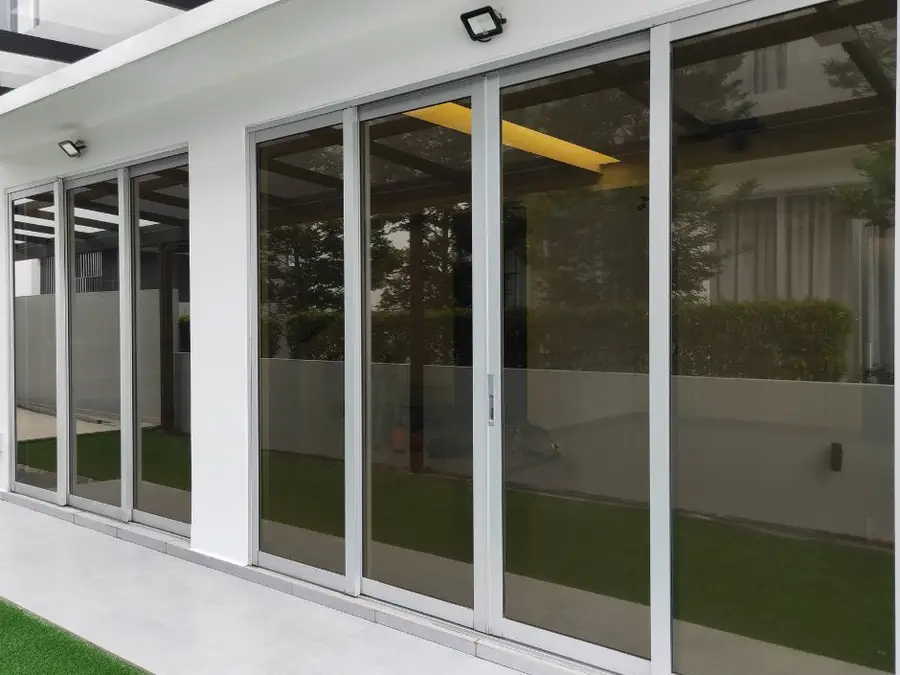
Winter: where low-E film comes in
Standard solar film is mostly a summer tool. In winter, heat moves the other way: warm indoor air loses heat to cold glass. Single-pane windows, common in older homes across the City and inner-ring suburbs, are especially leaky in this sense.
Low-E window film adds a low-emissivity coating that reflects some of your interior heat back into the room instead of letting it radiate out through the glass. It also provides solar control in summer, so it works in both seasons. It won't turn a drafty single-pane window into a new triple-pane unit, but it can make rooms near the glass feel less chilly.
The spec to look for is emissivity: the lower the number, the better the film reflects interior heat. If you are deciding between film and new windows entirely, read window film vs. replacement windows.
What affects your results
These are the factors that decide whether film makes a big or small difference in your home:
| Factor | Bigger benefit when… | Smaller benefit when… |
|---|---|---|
| Window orientation | Glass faces west or south | Glass faces north |
| Shading | No trees, awnings, or overhangs | Mature trees or deep porches shade the glass |
| Amount of glass | Large windows, patio doors, sunrooms | Few, small windows |
| Existing glass | Clear single-pane or basic dual-pane glass | Glass already has a strong low-E coating |
| HVAC system | System struggles to keep up on hot days | System is oversized or rooms are rarely used |
| How you live | Rooms are used during peak sun hours | Blinds stay closed all day anyway |
Shading is a big one in St. Louis. Neighborhoods with mature tree canopy, like many streets in Kirkwood and Webster Groves, may only need film on a few exposed windows, while newer subdivisions with young trees and big rear windows often have more exposed glass.
Why no one can promise a number
Your energy bill reflects much more than windows: insulation, air leaks, ductwork, thermostat habits, the age of your equipment, utility rates, and the weather that year. A hot summer after you install film can produce a higher bill than a mild summer before it, even if the film is doing its job.
So we don't quote savings percentages. What we can do is show you the film's measured performance, identify which windows contribute the most heat, and recommend film where it will do the most good.
Be wary of guaranteed savings claims
If someone guarantees a specific percentage off your bill without measuring your windows, looking at your exposure, or knowing your HVAC setup, treat that as a sales pitch rather than an engineering estimate. Ask for the spec sheet and judge the film on its published numbers.
Comfort benefits you notice even when the bill moves modestly
For a lot of homeowners, comfort ends up being the main reason to consider film. Even when the change on the bill is modest, film can deliver:
- Fewer hot spots. The area near sunny glass stops feeling like a heat lamp.
- More even temperatures. Less difference between the sunny side of the house and the shady side.
- Less AC runtime on peak afternoons. The system isn't chasing heat pouring in through the glass.
- Less glare. Easier TV watching and screen work.
- Fade protection. Up to 99% UV blocking helps protect floors and furniture, covered on our UV and fade protection page.
How to judge an energy-saving film
When you compare films, ask for these numbers on the spec sheet:
- TSER (total solar energy rejected). Higher means more overall heat kept out.
- SHGC (solar heat gain coefficient). Lower means less solar heat gets through the glass and film together.
- VLT (visible light transmission). Higher means a brighter room. Balance this against heat rejection.
- Emissivity. For low-E films, lower means better at keeping interior heat in during winter.
- Glass compatibility. Make sure the film is appropriate for your glass type, especially dual-pane units.
Film technology matters too. Ceramic and spectrally selective films can reject a lot of heat without a dark or mirrored look. Our comparison of ceramic vs. dyed vs. reflective window film explains the tradeoffs.
Is film worth it for your home?
If you have hot rooms, big sun-facing windows, or a sunroom you avoid in July, film is very likely worth looking at. For businesses, the same principles apply on a larger scale with office glass; see commercial window tinting. For homes, start with residential window tinting, and if budget is the question, read what sets the cost of home window tinting.
We serve homes and businesses across St. Louis City and County. Call (314) 200-0434 or schedule a free on-site estimate, and we'll look at your exposure, hold samples to your glass, and show you the spec sheet for each option.
Frequently Asked Questions
How much will window film save on my energy bill?
No one can honestly promise a number before the work is done. Savings depend on how much glass you have, which way it faces, shading, your glass type, your HVAC system and how you use it. Homes with lots of unshaded west- and south-facing glass tend to see the most benefit, and the comfort improvement is usually noticeable even when the bill change is modest.
Does window film help in winter or only in summer?
Standard solar control film mainly helps in summer by blocking solar heat. Low-E window film adds a coating that reflects some interior heat back into the room, which can help with cold glass and heat loss in winter. If winter comfort matters to you, ask to see low-E options during your estimate.
Will window film make my house darker?
Not necessarily. Ceramic and spectrally selective films are designed to block much of the infrared heat while letting most visible light through, so rooms can stay bright. Darker films block more light along with heat. We hold samples up to your windows so you can see the effect before you choose.
What numbers should I look at to compare energy-saving films?
Look at total solar energy rejected (TSER) for overall heat control, the solar heat gain coefficient (SHGC, lower means less heat gets in), visible light transmission (VLT) for brightness, and emissivity for low-E films (lower means better at reflecting interior heat). We show you the spec sheet for every film we recommend.